
Hand & BodySkincareFragranceHome

Impact

Sustainability & Ethics

We all live on the same planet and share the same challenges

LIVE WITH LESS AND FIND MORE HAPINESS

High performance products that are inherently richer, requiring less product and multi-taskers

By supporting Fair Trade, we support communities that practice sustainable farming — That make better productS for the environment, OUR HEALTH & soulS

Sustainability

Cardboard & Paper

Our cardboard containers are made in California, not China where most of these tubes come from. They’re made with FSC Certified for Responsible Forestry papers. The outer is 100% recycled paper with a rice glue adhesive and soybean wax lining. Our labels are FSC Certified for Responsible Forestry papers and made to be recycled.

Solid refills like lotion cakes and wax melts are packaged in paper bags. 

Thermal shipping labels requires no ink, made from FSC Certified for Responsible Forestry papers, Made in the USA and is BPA free and recyclable.

Shipping box and fill materials are 100% compostable and curbside recyclable. The exterior is bound by a compostable tape with soy ink and biodegradable, water activated adhesives that is curbside recyclable if not composted. 

Sustainability

Glass & Metal

Glass both insulates fire and provides luminance for candles. While glass is both heavier and breakable, for reasons of safety, we prefer glass and are actively exploring a refillable model, but metal containers are incredibly appealing, lightweight, reusable and recyclable.

In lieu of plastic, water-based skincare products glass containers are use with a plastic top. Even if glass tops were easily available, glass on glass do not seal properly, and until bioplastics make hard plastics a viability this is where we have to draw the line. We are looking into a refillable model with compostable refill containers to ship, relying on customers to clean and refill their glass containers. Until then, glass be cleaned easily, reused for refills or used for creative storage. Mantra: reduce, reuse and then recycle (as the last option).

For solid products such as balms, shampoo and conditioner bars, wax crumbles, anhydrous creams and candles we offer metal containers.

Sustainability

Plastic

For skincare, plastic it’s hard to avoid absolutely. It keeps air from entering products and provides a seal to combat leaks. Nibs for serum bottles are typically silicone or plastic which do not degrade like rubber nibs.

We are aware that recycling is not a guarantee, and we can never recycle the amount of plastic that’s constantly being made. For candles we offer metal tops, or you can omit the lid entirely.

Any plastic film used is a biodegradable, plant-based film. We’re really looking forward to bioplastics becoming widely available to indie brands like ours. The US is sadly behind other developed countries.

In the studio, we use plastic as little as possible. We use biodegradable nitrile gloves (and they’re fantastic) and any wrap needed is a sugar based plastic.

Sustainability

Artisan Wax Seal

Made from pure beeswax and dusted with natural mica, this can be popped off your container top or ripped off paper products and composted. We worked hard to avoid petroleum based wax seals that are much easier to find (you only need a hot glue gun), but we decided cradle to grave it was worth the effort to make it biodegradable. It can also be used towards fire starters or safely thrown in your rubbish bin. Because it’s organic it will break down, while those was seals found so easily on Amazon become a sticky puddle of petroleum that will live for millions of years. Thumbs down.

Why we don't use plastic tubes

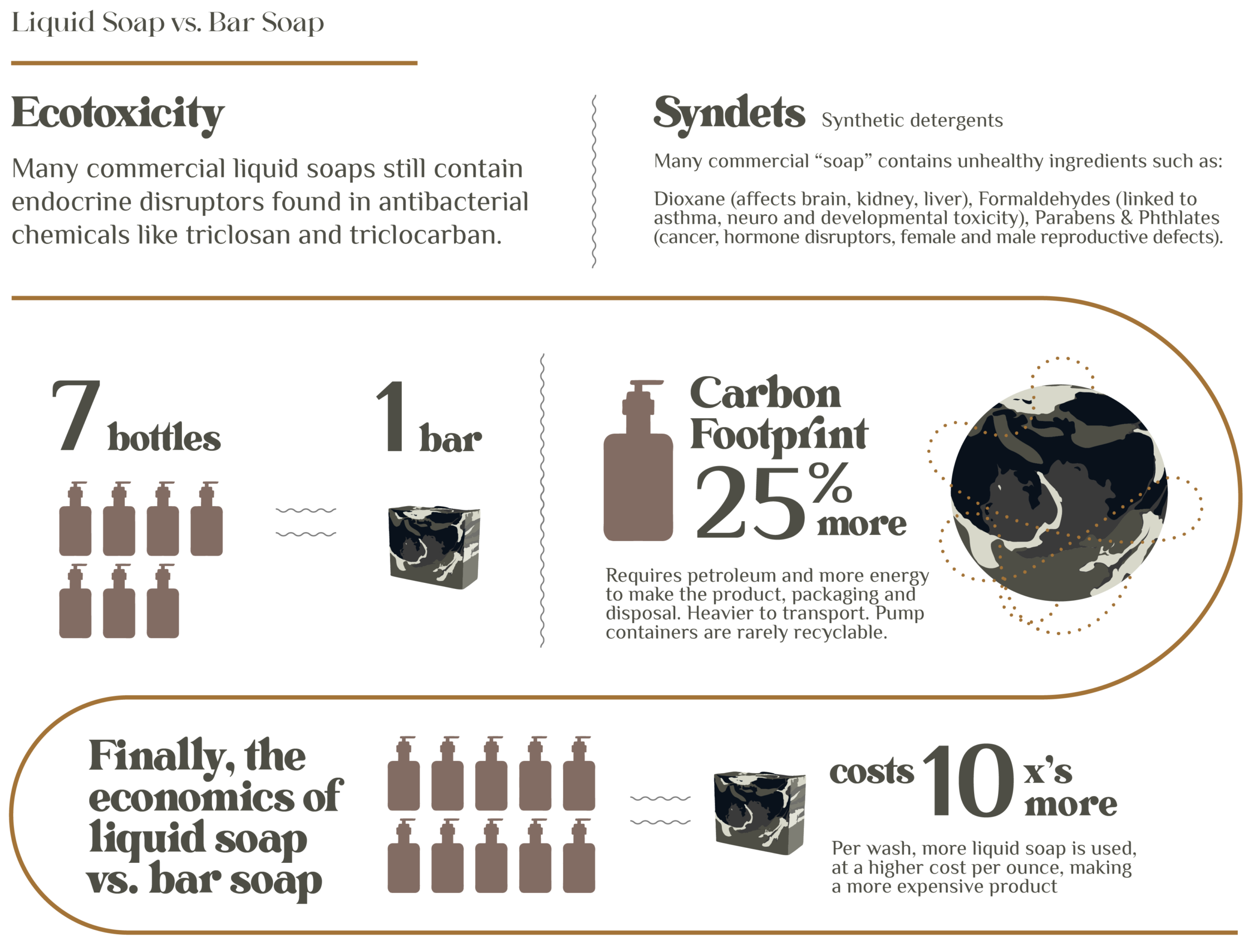
Recycling plastic tubes is not black and white and the acceptance varies by location. The sorting required is expensive and there is little incentive when the by products of producing oil is cheaper than alternate options. Plastics often have mixed materials, mixed colors and are generally rejected. We have been and continue to produce more plastic than we can ever recycle.

We want a pretty sure bet with our packaging. For now, we’ll stick to wide mouth containers that are easy to clean, and single material metal tubes.

Waterless, high performance products take the load off
Ethical Practices
Fair Trade / ECOCERT / COSMOS

It wasn’t so very long ago farm to table and organic structures became part of our lexicon. We need to know where ingredients comes and who made them. A significant percentage of skincare and cosmetics come from countries outside the USA. Even if we had the climate to grow these wonderful ingredients, we do not have the collective knowledge and history to produce at scale.

Use it well, use it up, buy it fresh and only what you need.

Whenever available, we look for Fair Trade, ECOCERT and COSMOS Certified ingredients as the first touchpoint in our products as well as the Roundtable on Sustainable Palm Oil and Global Shea Alliance. These structures provide fair wages and support sustainable farming practices with educational support. It also controls the misuse and abuse of animals and children that plague these industries.

Shareholders & Stakeholders

Roundtable on Sustainable Palm Oil (RSPO)

Palm is often subject to lazy boycotting and marketing without understanding the challenges and solutions. Deforestation contributes to displacement and loss habitat and driving an industry (in all agroforestry) that is both dangerous and weakens community structures. When workers are not treated fairly the desperation to provide for a family can drive decisions like clear cutting old growth land for cash crops. Palm is part of a wide range of sectors from the food industry to animal feed and biofuel. This is why many global countries and private and public businesses come together to solve the environmental crisis with initiatives that support growers. Their desperation or lack of oversight does not lead to harmful actions to our ecosystem. Boycotting palm as an ingredient won’t solve this problem. Supporting initiatives like RSPO and brands that proudly use RSPO palm funds these initiatives. We definitely encourage everyone interested in palm products to read up on the efforts of RSPO

Shareholders & Stakeholders

Global Shea Alliance (GSA)

8 million shea trees are lost every year due to climate change and unsustainable clearing of land. If we only consider what this means for the environment, shea trees fix 1.5 million tonnes of CO2 every year. Global Shea Alliance (GSA) promotes women’s empowerment and protection of the shea eco-system. It provides a path to income generation and a way out of poverty. In Africa where food sources are limited and shea is only grown 6 months of the year this is critical. Shea butter requires a lot of labor and toil – done by women. We all want to be paid fairly for our minds, bodies and expertise and this is the GSA commitment. It includes program training for quality standards, sustainable farming and greater efficient in processing. Learn more about GSA.

Shareholders & Stakeholders

Certified Humane Farm Animal Care (HFAC)

The small group of our goats milk soaps come from California farms that are individually Certified Humane Farm Animal Care (HFAC) — an independent, third-party non profit organization. Their strict guidelines ensures the care for these wonderful animals. Goats are free from steroids, antibiotics and growth hormones. Farmers that raise goats do it because they truly love the animal. If you’ve met a goat you know how much personality they have. While we prioritize and feel most strongly about plant-based ingredients, goats milk have unique, naturally occurring fatty acids that are beneficial for skin.

Cleaning for Reuse

Skincare

We hope you liked your skincare enough you scraped every last bit from from the container. For Glass: with a wetted paper towel, remove as much oils/butters as possible. For heavier products apply Isopropyl Alcohol (Rubbing Alcohol) to dissolve oils and butters. From there you can wash it with hot, soapy water for reuse (preferred) or recycling.

Candles

There are many methods to clean candle jars and if you have a wax melter or even coffee mug warmer you can still enjoy the smell of your candle, even if it won’t light anymore.

Warm Method After the wax has been fully melted on the warmer, let it cool for 10 minutes. The wax should still be soft enough but not hot to chance burning skin. Pour the wax into a paper towel and throw in the bin. While the glass is warm, remove as much wax as possible with paper towels.

Cold Method Adding just a little water and popping in the freezer is a quick way to clean up and it doesn’t require much time to wait. Once the water looks like it’s frozen, lightly draw a dull butter knife (dull side away from the teeth) down the edge of the glass slowly and the frozen form should release entirely or in enough pieces that are easy to remove.


Final Clean Up Natural oils clean up much nicer than paraffin. The glass may have a hazy look. Dampen another paper towel with Isopropyl Alcohol (Rubbing Alcohol) and rub the glass until it’s as clean as you can get. This step dissolves oils and wax very effectively. From there you can wash it with hot, soapy water. Reuse, donate or recycle.
Core Ingredients

Beeswax

Bees (particularly native bees) are enormously important to our ecosystem. The honey bee is not native to North America, but our stance, like our belief in rewarding our American apiaries. Not only does this benefit our food system with the ability to raise a bee species, but it raises the awareness for other bee species. Beeswax is also already a wax, unlike many vegetable waxes that require extraction (which sometimes includes hexane), beeswax is a healthy option.  

It’s important to be aware of where beeswax comes from. Many suppliers are from China with no oversight that cut their wax with other cheaper materials, ie. paraffin and raise bees quite cruelly. We only support USA organic farms.

Every ingredient needs to be weighed, but we feel awareness for pollinators is crucial and if the honey bee is the poster child for it, we’ll accept that. Many pesticides have changed because of bees and that saves other species too. We understand how vegans feel (which is why we also provide soy candles) but we feel if farmers are investing in bees it’s a domino effect of how they make their other decisions too. Maybe they’ll invest in no till equipment, power their farms with wind and solar.

Core Ingredients

Soy

Magic beans. While there’s no giant and no golden egg to be found, this easy to grow crop is solid gold when for so long we relied on paraffin. Like our beeswax suppliers, we get our wax from USA farms, kosher and organic. Our suppliers have large scale commitments to climate goals, 100% deforestation-free, and exploitation free soy and respect for human rights and supporting small shareholders in their supply chain. While there are so many choices for chandlers to choose from, we are happy to support a broad swath of initiatives that match our commitments. 

Core Ingredients

Wooden Wicks

Lumetique patented wooden wicks are made from only 100% natural, untreated wood from Sappy Fruit Trees sustainably sourced in the USA (sourced from FSC-certified mills). The term Sappy means the tree has undergone stress contributed to anything from pathogens, fungus or insects and the tree will not fruit and starts to die. This is such a wonderful way to give purpose to these problems and trees planted in this initiative. The adhesive used to bond the wicks we use (booster wicks) are created using a vegan, non-toxic proprietary adhesive with wood species not listed in the CITED appendices or on the IUCN Red List of Threatened Species.


Core Ingredients

Fragrance

All our products are free of Phthalates \ Parabens \ SLS + SLES. For home and personal fragrance, we blend essential oils and aroma chemicals to create a symphony in molecules. While we understand the movement towards essential oil candles, not every oil is appropriate which could be a respiratory or fire hazard when burned, or create little to no performance in a candle. Others are perfection carried in a wax base.

Essential oils are incredibly precious. One only has to look at how many pounds of plant matter produce ounces of essential oils. We prefer to use essential oils in skincare for  the benefits on skin. Aromachemicals are regulated and tested which can mimic natural scents, isolate specific molecules from a source and introduce molecules not found in nature. Aromachemicals also blend essential oils with those made in a lab. International Fragrance Association (IFRA) has strict regulations that reputable formulators follow carefully in the use of synthetic* or natural aromas. (*Synthetic means lab or man made, it does not necessarily mean petroleum-based). As we use “clean scents” that excludes petroleum out entirely.

We do love the light and natural scent of beeswax unscented candles for those that just love the light.

Impact

How can we help?