Use & Care Guide
Candles
Care tips for the best burn
If you’re a fan of wooden wicks you probably know they can be a little finicky (but well worth it) at least to get them initially lighted. Here are some common issues and ways to solve it.
- Cotton wicks light easily, but wooden wicks need a good char to get started. Often lighting 2-3 times may be required initially but after that will light with no problem.
- For your first light, burn it at least 4 hours to ensure an even melt across the top. It does not need to reach the edges. This is not a sign of tunneling.
- If your candle does not reach the edges which is common theory for paraffin candles in particular, know that this is not only common but as designed. The next subsequent burns will catch up and leave residual wax along the edges so that when the wax is low in the vessel it does not create an overly hot environment. It’s game of averages from complete combustion (very top of the candle with lots of oxygen) to the bottom where there is little oxygen in the vessel. Beeswax burns quite differently than soy based candles and especially paraffin. The wax is much harder and requires more heat which ultimately makes them last longer.
- Burn up to the last 1/4″ of wax at the bottom. The jar can be continued to use on a candle warmer to enjoy until the candle releases all the scent. Dispose of wax as waste.
- Keep your wick short and cut while cooled. Wooden wicks can be cut like cotton wicks, but if you don’t mind a little char on your fingers, give it a snap as close to the wax as possible which is the easiest way to know how much to remove. Kind of like snappy an asparagus. A good length for cotton wicks is about 1/4″. A tidy wick makes the candle cleaner and last longer.
- Keep your candle on a solid, level, fireproof surface free from cleaners, chemicals or fumes which can start a fire from volatile gasses.
- Be mindful of pets and children around lit candles who can overturn a burning candle.
Always burn within sight. Keep away from children and pets. Do not light when using cleaning products. Wipe table dry before lighting. Keep away from drafts and flammable items. Trim wick to 1/4 (6mm) before lighting. Do not burn longer than 4 hours. Stop burning when 1/4” of unmelted wax remains.
Skincare
How to care for paper containers
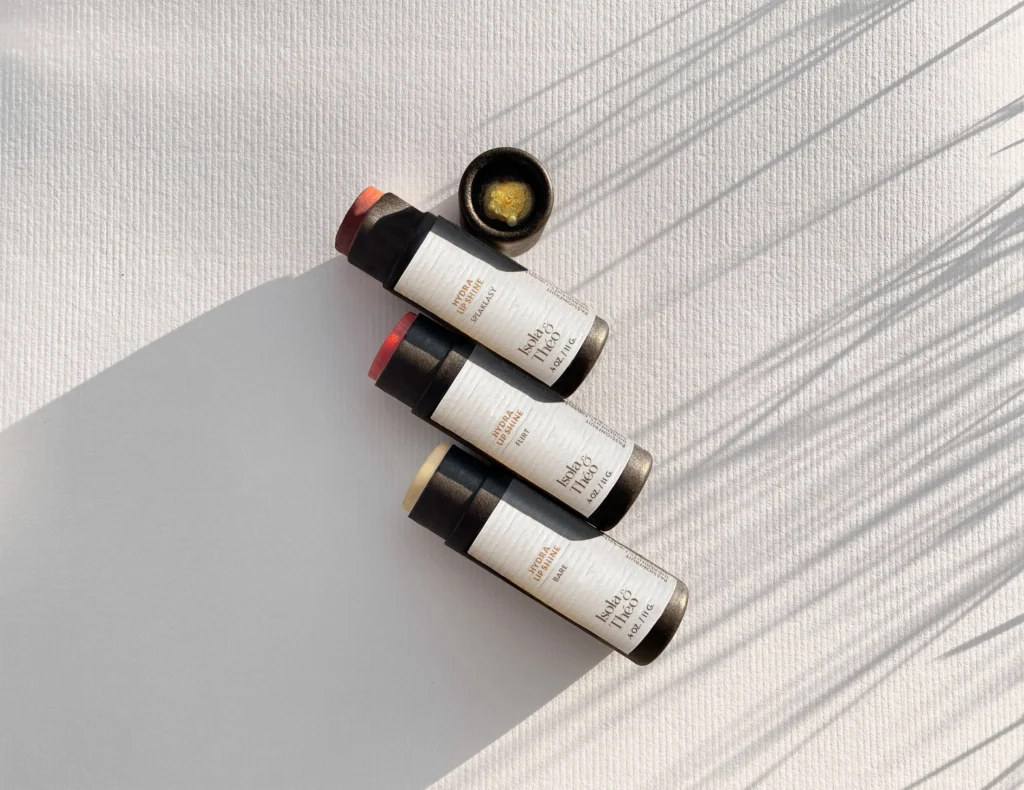
Cardboard tube containers require only a little bit of brain rewiring. Rather than twisting an inner plastic mechanism, simply push gently on the bottom to advance the product.
The product may be a bit snug before the initial push as it has bonded from pouring but only needs a slight amount of friction and air between to keep it mobile. You do not need to heat the container, just provide a little pressure lightly from different corners of the bottom seal with even pressure. If you’ve advanced too much you can carefully push it back down again. For skinny tubes (which are nice for finer lines) even for delicate fingers it will prove tougher. Insert a pen or pencil with a little pressure and you’re ready to go again.
Whipped Butters
A get rich quick scheme. Whipped butters are extremely rich and requires around 50% less product than a hydrous product, certainly less than typical commercial products. Use sparingly or it will feel heavy and greasy for a while. Pad a light amount and work the butter into your skin and see how the application feels. You can always layer more. The palms have more touch receptors and are more sensitive to any type of product in excess. A great way to move product around to dry the palms is by massaging on to the wrists which are largely forgotten and oftentimes get very dry in the winter from washing hands.
Keep at room temperatures — preferably in a cool, dark place like a drawer or cupboard to maintain the whipped quality. If subjected to intense heat, the oils will liquify and will not reconstitute to the same texture. The butter will still be as effective and as potent, it just won’t have the light quality and you’ll want to use even more sparingly.
Solid Balms
Solid balms are made with more harder oils that only need warmth from your skin to soften. Warmed or just washed skin, or simply holding in your palms for 10-20 seconds is all that’s needed to initially soften. We love solid bars in particular because they last so much longer and can easily be refilled.
Keep at room temperatures — preferably in a cool, dark place like a drawer or cupboard. It’s tempting to bring these balms with you as they are solid but use caution in summer heat. Like leaving lip balms in the car, it won’t be long until they ooze along the edges as it softens up.
Soap
How to care for Soap
Hand & Body
Our soap lathers quickly and very well without much water at all. To maintain freshness, health and shape to your handmade soap, it should always be kept out of soggy environments. A well draining soap dish provided for hand and bath soap are essential, and soap saver bags to extend the slivers that remain ensure the best care. If you like mixing scents, enjoy the unexpected pleasure of your favorite soaps which likely pair very well together for a guessing game of “which one was that”.
Dishes & Clothes
The great replacer. Liquid soap was created in the mid-1800’s, the proverbial drop in the bucket compared to thousands of years of bar soap before that. Bar soap was the way we cleaned our dishes and laundry. If you’d like to kick preservatives (that largely are not safe for aquatic/marine life, many for our health too), give the humble bar a try. We’ve been using bar soap to wash dishes for a few years, and decades for laundry and haven’t looked back. You will be astonished how long the bar lasts because you need very little soap (especially with soap brushes) to clean dish and cutting knife and boards galore. This is a great way to divest from shipping high percentages of water AND plastic containers which are recycled at low percentages, if at all.
For upcycled kits, simply add your own cleaning agents you have come to rely on, or try our recipe we’ve been using since 2006. This is a no waste way to use every scrap of soap from off-cuts and add some confetti to your laundry. Every bit of precious oils or butters that have been harvested and processed to perfection are not wasted. Fragrance will always be a “mixed bag”.
Keep at room temperatures — preferably in a cool, dark place like a drawer or cupboard to maintain the whipped quality. If subjected to intense heat, the oils will liquify and will not reconstitute to the same texture. The butter will still be as effective and as potent, it just won’t have the light quality and you’ll want to use even more sparingly.